Zuo’er’s Analysis of the Door‑and‑Window Market: Ride the Trends and Pursue Long‑Term Growth Through Value‑Oriented Development

In 2026, as the construction of “quality homes” becomes a national initiative and the dual‑carbon goals keep advancing, the door‑and‑window industry has formally left behind the extensive development phase driven by capacity expansion. It has entered an in‑depth transformation era marked by quality restructuring and value‑based competition. As a robust enterprise rooted in Foshan’s door‑and‑window industrial cluster, Foshan Zuo’er Door and Window Technology Co., Ltd. (hereinafter referred to as Zuo’er Doors & Windows) draws on its industry experience and market insights to deliver a comprehensive analysis of the 2026 market landscape. It clarifies development opportunities and challenges, defines its brand roadmap and offers reference perspectives for the whole sector.
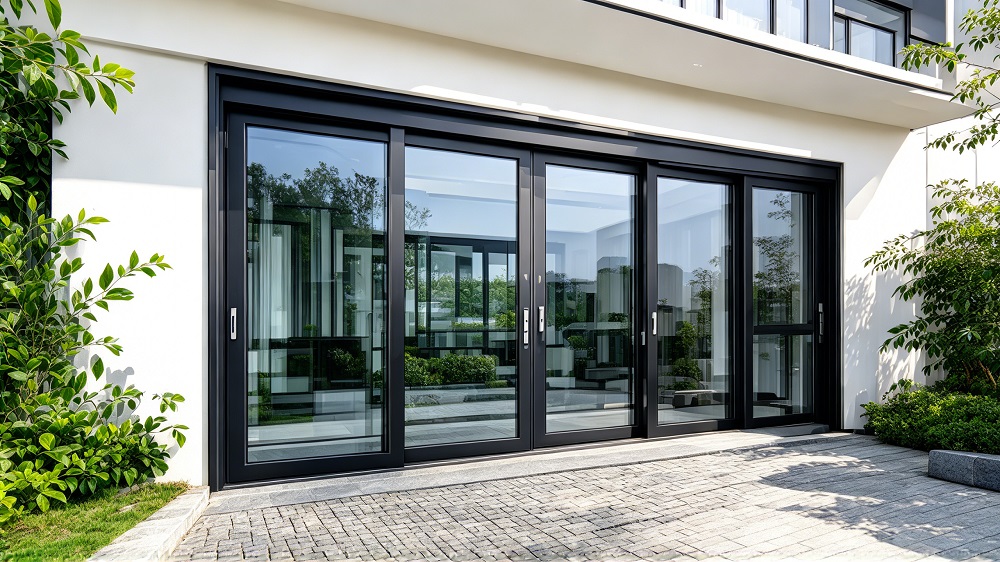
From a policy perspective, 2026 brings a landscape combining policy dividends and regulatory constraints for the door‑and‑window industry. This year’s government work report explicitly promotes the construction of safe, comfortable, green and smart “quality homes” and launches housing‑quality improvement programmes. Under this guidance, doors and windows have evolved from a secondary building component into a core link for quality enhancement, acting as a key carrier that embodies “quality‑home” standards. Meanwhile, the new standard Evaluation for Green Building Materials — Building Doors, Windows and Fittings has come into force. It draws clear distinctions between exterior and interior window indicators and sets dedicated evaluation criteria for hardware fittings, thermal‑insulation strips and other accessories. This forces manufacturers to upgrade product quality and accelerates the phasing‑out of low‑end production capacity.
Zuo’er Doors & Windows holds that policy guidance and regulations are not restraints on industrial progress, but important driving forces for high‑quality development. Enterprises that uphold quality and prioritise innovation will gain greater policy support and market opportunities, supporting their standardised and scaled‑up growth.
On the consumer‑market front, door‑and‑window demand shows clear trends of upgrading and segmentation in 2026. With rising living standards, consumers no longer view doors and windows merely as decoration components, but as critical nodes of building‑energy consumption. Beyond basic functionality, they attach greater importance to core performance metrics including energy efficiency, sound insulation, environmental‑friendliness and smart features. Among homebuyers seeking improved housing, 68 % rank window energy‑saving performance among their top‑three decision‑making factors, and the Uw‑value (overall window heat‑transfer coefficient) has become a vital benchmark for product value.
Consumer demand is also diversifying by scenario. Requirements for product type, specification and performance vary significantly across residential renovation, engineering construction and old‑community retrofitting. Surging demand for window replacement in ageing residential blocks represents a fresh growth driver for the industry. Furthermore, rising consumer awareness of rights protection raises higher expectations for product quality and after‑sales service, compelling enterprises to improve end‑to‑end service systems. Zuo’er believes brands that align with consumer needs, prioritise user experience and deliver customised solutions will win greater market recognition.
In terms of competitive dynamics, polarisation within the door‑and‑window industry will intensify in 2026. Value‑driven competition is replacing price‑driven rivalry as the central theme. The market is characterised by overcapacity for conventional doors and windows alongside insufficient supply of high‑performance system windows. Some small‑and‑medium‑sized manufacturers still rely on low‑price competition and lack core technology and service capabilities. Squeezed by tightening regulations and consumption upgrading, their operating space keeps shrinking. Leading enterprises, by contrast, focus on R&D, product innovation and service enhancement. Competition has shifted from individual‑product rivalry to multi‑dimensional system‑level competition covering materials, craftsmanship, services and industrial ecosystems. R&D spending ratios continue to climb and the level of independent core‑technology development keeps improving.
As the heart of China’s door‑and‑window industrial cluster, Foshan hosts a large number of upstream‑and‑downstream enterprises with remarkable industrial advantages, yet it also faces challenges including homogeneous competition and regional‑brand breakthroughs. According to Zuo’er, intensifying competition essentially signifies industrial reshuffling and value reconstruction. Only by staying committed to quality, investing in core‑technology development and building differentiated competitive strengths can companies thrive in fierce market conditions.
Zuo’er identifies four major directions shaping the industry’s future: green development, intelligence, system‑oriented solutions and service‑centric operations. For green development, driven by dual‑carbon targets, energy‑saving doors & windows and eco‑friendly materials will see wider adoption. Circular‑economy technologies such as recycled‑aluminium processing will become an important enabler for corporate green transformation. In intelligence, smart functions including AI light‑sensing adjustment, wind‑rain sensors and remote control will gradually become standard features for mid‑to‑high‑end windows. Doors and windows will integrate into whole‑home smart ecosystems and interconnect with fresh‑air systems and other smart‑home devices. Regarding system‑oriented development, standalone‑product competition will recede. System windows delivering holistic solutions will dominate market development. For service‑centric operations, integrated services spanning product sales, installation, after‑sales support and full‑lifecycle maintenance will emerge as a key source of core‑brand competitiveness.
A Zuo’er representative commented that 2026 marks a pivotal year of transformation for the door‑and‑window industry, filled with both opportunities and risks. Faced with a complex market environment, Zuo’er will adhere to its development philosophy of Quality First, Innovation‑Driven, Win‑Win Integrity. It will actively follow policy guidance and consumer trends, increase R&D investment, expand its product portfolio and perfect its service framework. The company will prioritise R&D for green and intelligent products and strengthen full‑chain service capabilities. Drawing on Foshan’s industrial‑cluster strengths, Zuo’er will integrate upstream‑and‑downstream resources to continuously lift product quality and service standards. While pursuing its own high‑quality brand growth, Zuo’er will contribute to the industry’s shift toward standardisation, superior quality and sustainability. Together with industry peers and partners, it aims to share market dividends and build a new era of quality home living.
In response to the 2026 market realities, Zuo’er Doors & Windows has optimised its brand strategy and national investment‑promotion layout. With market‑oriented products and supportive policies, it sincerely invites partners nationwide to seize industrial opportunities and achieve mutually‑beneficial shared growth.
Company Website: https://www.zuoer888.com

ADDRESS:No.88, Hengxing Road, Henggang Industrial Zone, Shishan Town, Nanhai District, Foshan City
Copyright © 2026 Foshan Zuo'er Door and Window Technology Co., Ltd. 粤ICP备2026008250号-2